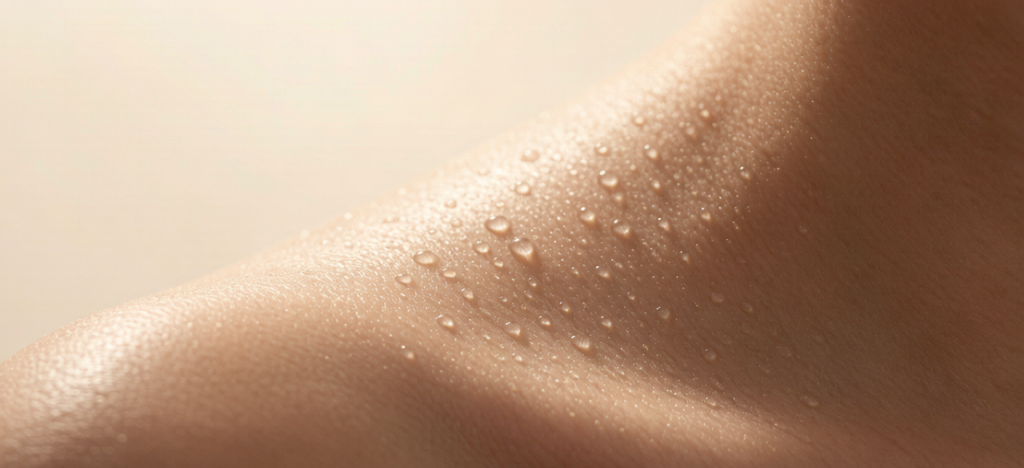
The skin barrier, specifically the stratum corneum, is often described using the brick-and-mortar analogy. Corneocytes are the bricks, and the lipid matrix between them is the mortar. When this lipid mortar degrades, trans-epidermal water loss accelerates, irritants penetrate more easily, and the skin becomes reactive and inflamed.
The Lipid Matrix Composition
The intercellular lipids of a healthy stratum corneum consist of approximately 50% ceramides, 25% cholesterol, and 15% free fatty acids by weight. This is the foundation of the 3:1:1 ratio that barrier repair research has established as optimal for restoring compromised skin.
Ceramides, specifically ceramide 1 (EOS), ceramide 3 (NP), and ceramide 6-II (AP), form the lamellar bilayer structure that creates the primary permeability barrier. Without adequate ceramides, the lipid matrix cannot self-assemble into the orthorhombic packing pattern necessary for water retention.
Why the Ratio Matters
Landmark research by Dr. Peter Elias and colleagues demonstrated that applying individual lipids, ceramides alone for example, can actually delay barrier recovery by disrupting the molar ratio required for proper lamellar body formation. Only the physiologically balanced combination accelerates repair.
This explains why products containing a single ceramide with no complementary lipids often produce disappointing results. The skin requires all three lipid classes in the correct proportion.
Clinical Applications
For barrier-compromised skin, whether from over-exfoliation, retinoid initiation, atopic dermatitis, or seasonal changes, products formulated with the 3:1:1 ratio show significantly faster TEWL recovery. Look for formulations that explicitly list ceramides, cholesterol, and fatty acids.