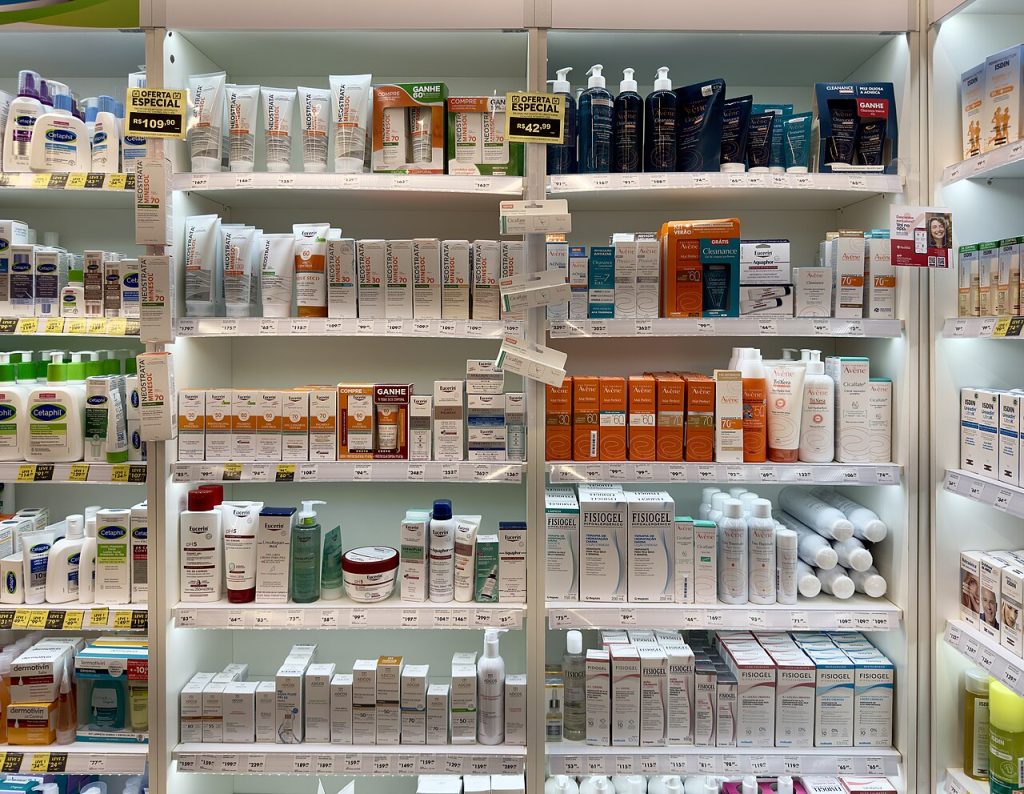
The SPF number on a bottle describes how well a product prevents a specific endpoint, sunburn, caused by a specific waveband, under a specific application thickness. That is useful information and it is narrower than most people assume. Everything else the label claims, and much of what it omits, decides whether the product protects the skin you actually have.
What SPF is measuring
Sun protection factor is determined in vivo by comparing the time to erythema on protected and unprotected skin. The endpoint is redness, which is driven overwhelmingly by ultraviolet B. An SPF of 30 means roughly thirty times the dose is required to produce the same redness, not that thirty times less damage occurs across every pathway.
The application thickness in that test is standardised at a level most people never reach. Real-world use is commonly a fraction of it, and protection falls off faster than the number suggests. This is the honest interpretation of the high numbers on the shelf: a 50 used thinly may deliver something closer to what a 15 delivers when applied properly, which is still worth having and is not the same promise.
Erythema is also a poor proxy for the damage that matters over decades. Ultraviolet A drives pigmentation, photoaging and part of the immune suppression with far less visible redness at the time. A product can score well on SPF and be mediocre on UVA.
Reading the UVA side
The PA system grades UVA protection from PA+ to PA++++, based on the persistent pigment darkening response. PPD is the underlying number, comparing the dose needed to produce a sustained tan on protected versus unprotected skin. A product labelled PA++++ has meaningful UVA coverage; a PA+ product has very little despite whatever the SPF says.
In the United States, the broad spectrum claim is tied to critical wavelength, which requires the absorbance curve to stay largely within the UVA range. It is a floor, not a guarantee of balance, and it does not produce a number you can compare between products the way PA does. The Boots star system in the UK and the European UVA circle both attempt a ratio between UVA and UVB protection, and each uses a different threshold.
For anyone with melasma or post-inflammatory pigmentation, the UVA grade matters more than the SPF. Pigment cells respond to UVA and to visible light, and a product built around UVB protection with a weak UVA filter system will underperform regardless of the number on the front.
What no label tells you
Photostability is the largest omission. Avobenzone, the most common UVA filter in Western formulas, degrades under ultraviolet exposure unless it is stabilised by other filters such as bemotrizinol or octocrylene. A formula can measure well in a lab and lose a substantial share of its UVA protection within an hour or two on the skin. That behaviour is not disclosed anywhere on the package.
Visible light is the second omission. High-energy visible light in the violet and blue range contributes to persistent pigmentation in darker skin tones and to the pigmentation that follows inflammation, and it is not addressed by organic UV filters at all. Tinted formulas containing iron oxides are the practical countermeasure, and they are rarely labelled as such. If your concern is melasma, a tinted sunscreen is doing something a clear one is not.
Water resistance claims are also narrower than they read. The test involves immersion and then measurement, and it does not describe what happens after towelling, sweating for three hours, or applying makeup over the top.
Judging a product in the shop
Look for a UVA grade that matches the SPF rather than a very high SPF with no UVA information. Look for a filter system with at least one photostable UVA filter, which in practice means bemotrizinol, mexoryl or a stabilised avobenzone combination. Look for a texture you will use in the quantity required, because the best filter system applied at a quarter of the dose is worse than a modest one applied properly.
Price is a poor guide. The filters that matter are commodity ingredients, and a pharmacy own-brand formula with a modern filter system will often outperform a luxury product built on an older one. What you are paying for at the top of the market is texture and finish, which affect adherence and therefore matter, but are not protection.
When a sunscreen is not enough
If you have melasma, sunscreen alone will not control it, because visible light and heat are also drivers, and because the pigmentation is being maintained by vascular and inflammatory signalling. If you have a photosensitivity disorder, lupus, porphyria or a drug-induced reaction, the plan needs medical input and possibly a much higher protection strategy than any cosmetic product provides.
The label also will not save you from application failure. Two milligrams per square centimetre on the face and neck is roughly the two-finger rule, and reapplication every two hours outdoors matters more than the difference between SPF 30 and 50. If you are using a retinoid or an acid, your skin is more photosensitive and the case for consistent use gets stronger, not weaker. General information, not medical advice.